Is NMIMS Distance MBA Worth It? My Honest Take After Digging Into the Real Numbers
I spent a few weeks talking to people who actually completed this program, going through NMIMS's own disclosures, and comparing fee structures against other distance MBA providers before writing this. Too many articles on this topic just repeat the same brochure lines without asking the obvious question: does this degree actually change anything for the person paying for it?
Here's what I found, without the sugarcoating.
Why I Decided to Look Into This Properly
A friend of mine, an operations executive at a logistics firm in Pune, asked me this exact question over a phone call last month. She'd already spent two hours reading forum threads and college comparison sites and still felt confused. That conversation is basically what pushed me to write this piece the way I have, focused on decisions people actually need to make, not generic praise.
What NMIMS Distance MBA Actually Is
NMIMS, short for Narsee Monjee Institute of Management Studies, runs its distance and online MBA through a separate wing called NMIMS Global Access School for Continuing Education (often shortened to NMIMS GA or NMIMS CDOE). It's built for people who already have a job and don't want to give it up just to study further.
A regular full-time MBA asks you to pause your career for two years. This one asks you to fit an MBA into the career you already have. Different approach entirely, and it matters more than most people realize when weighing the decision.
The Program Details Nobody Explains Clearly
Duration and How Classes Actually Run
The standard program length is two years. Study material gets delivered through the online portal, along with recorded lectures and periodic assignments. Exams still happen offline at assigned centers in most cases, though NMIMS has been shifting parts of its evaluation process online in recent academic cycles.
Specializations Worth Picking
This is one area where NMIMS genuinely stands out compared to smaller distance education providers. You get options across Marketing, Finance, Human Resources, Operations, and newer additions like Business Analytics and Digital Marketing. If your current job touches data or digital campaigns, these newer specializations tend to hold more practical relevance than the traditional ones.
What You'll Actually Pay
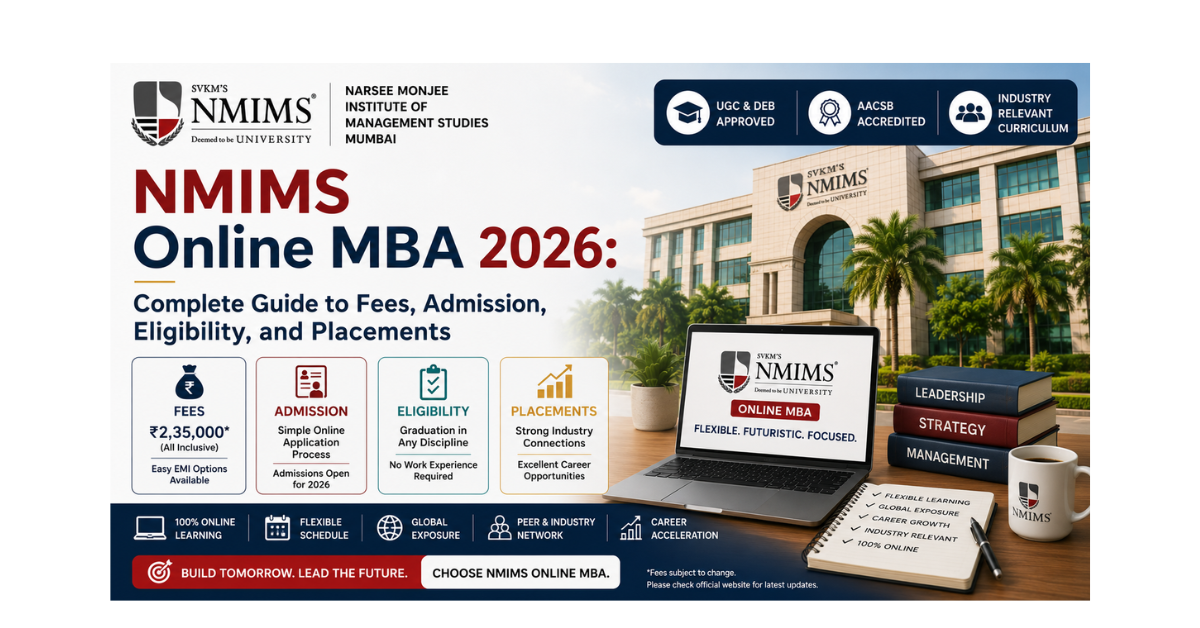
The total fee sits well below what most full-time MBA programs charge, particularly the private ones that run into fifteen or twenty lakhs. NMIMS positions this program as accessible rather than premium, and the pricing reflects that positioning honestly.
Where This Degree Genuinely Delivers
UGC-DEB Recognition Isn't Just a Checkbox
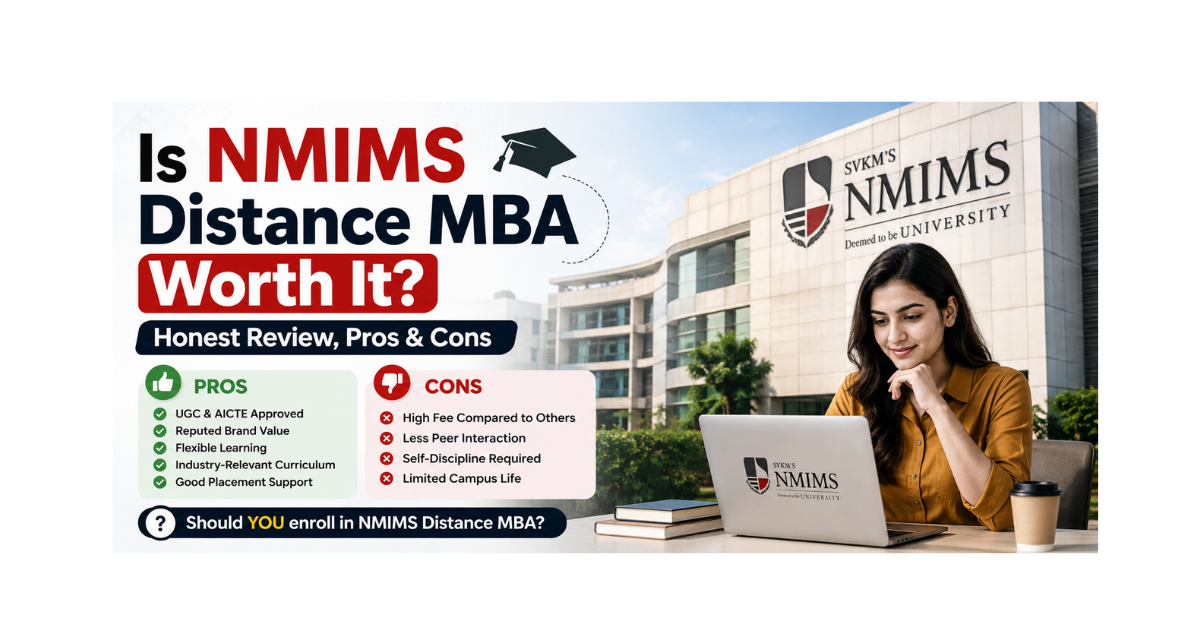
This part actually matters more than people give it credit for. NMIMS Distance MBA carries UGC-DEB approval, which means it holds legal standing for government job eligibility, promotions, and further academic applications across India. A lot of distance education providers can't say the same thing, and choosing an unrecognized program is a mistake that follows you for years.
Studying While Still Earning
You don't quit your job. You don't lose your salary. You study around your existing schedule, which for someone with EMIs, rent, or a family depending on that paycheck, isn't a minor convenience. It's often the deciding factor.
The Cost Math Actually Works Out
Not everyone can justify spending their savings, or taking an education loan, for a full-time MBA with uncertain placement outcomes. NMIMS Distance MBA sits in a comfortable middle zone: recognized degree, manageable cost, no career interruption.
Where People Get Disappointed
You Won't Build a Network Sitting at Home
An MBA's real value often comes from the people sitting next to you in class, not just the syllabus. Full-time programs give you batchmates who later become business partners, references, or hiring managers at companies you want to join. Distance programs simply don't replicate that. You're studying largely on your own, and that trade-off is real.
There's No Placement Cell Waiting for You
Full-time B-schools run structured placement drives, resume workshops, and interview preparation sessions. NMIMS Distance MBA doesn't offer anything close to that. This degree works as a support tool to strengthen your current career trajectory, not as a launchpad into a brand new industry.
Some Recruiters Still Judge It Differently
I won't pretend this bias doesn't exist. Certain traditional industries and older hiring managers still rank distance MBAs below full-time ones, regardless of which university issued it. This is slowly changing as remote work and continuing education gain acceptance, but it hasn't disappeared completely.
A Realistic Way to Decide If It Fits You
If you're currently working in a mid-level role and your company recognizes formal qualifications for promotions, this fits well. Government job aspirants who need an MBA for eligibility criteria also benefit here. Small business owners and entrepreneurs looking for structured management knowledge without pausing their operations tend to find real value in this format too.
When I'd Tell Someone to Skip It
If you're fresh out of undergrad with no work experience and hoping to break into consulting, investment banking, or a completely different industry, this program likely won't get you there. Those paths usually run through full-time MBA programs with strong alumni networks and dedicated placement support. In that specific situation, saving up for a full-time seat somewhere else is the smarter long-term move.
Stacking NMIMS Against Other Distance MBA Options
Compared against other UGC-approved names like Annamalai University or IGNOU, NMIMS generally carries a stronger brand reputation and slightly better perceived quality in the job market. It's nowhere near the level of an IIM executive program, but within the distance education space specifically, it holds a solid, respectable position. It's the dependable mid-range choice, not the cheapest option and not the flashiest one either.
So, Is It Worth It? My Actual Opinion
Yes, if your goal is skill growth, formal recognition, and career progression within your current field or company. No, if you're expecting it to open doors into industries where full-time credentials and campus networks still carry serious weight. The degree does exactly what it's designed to do. Problems only show up when people expect it to do something else entirely.
Final Thoughts
NMIMS Distance MBA isn't a shortcut to a dream job, and it was never marketed as one if you read the actual program details closely. What it does offer is a legitimate, UGC-recognized degree that fits around a working professional's life, priced reasonably, with specializations that actually match current industry demands. Match your expectations to what this program is actually built for, and you'll walk away satisfied with the decision either way.
Frequently Asked Questions
1. Is NMIMS Distance MBA recognized by UGC?
Yes, it holds UGC-DEB approval, making it valid for government job applications, promotions, and further studies across India.
2. Will I get placement support after completing this MBA?
No, NMIMS Distance MBA doesn't offer placement assistance the way full-time programs do. It's meant to strengthen your existing career, not replace job hunting.
3. How long does the program typically take?
The standard duration is two years, though extensions are usually available depending on university policy at the time of enrollment.
4. Is NMIMS Distance MBA better than IGNOU's program?
NMIMS generally carries slightly stronger brand recognition among recruiters, though both programs hold valid UGC approval.
5. Do I need to attend physical classes for this program?
Most coursework happens online, but exams are typically conducted at designated offline centers, based on current academic year policies.
6. Is this program affordable compared to full-time MBAs?
Yes, the fee is significantly lower than most full-time private MBA programs, making it accessible for working professionals.
7. Should someone with no work experience choose this program?
It's better suited for working professionals rather than fresh graduates, since career switching support and networking opportunities remain limited in this format.